The short answer: yes. Paraguay imposes no general restriction on foreign ownership of real estate — you can buy urban property on a passport alone, with no residency, visa, or local partner required. The one meaningful exception is rural land in the border zone, which is restricted for nationals of Paraguay’s neighbouring countries, not for buyers from further afield. What follows is how the rule actually works, where it applies, and how property fits into Paraguay’s real estate residency route.
The general rule: open ownership, no residency required
Paraguay’s constitution and civil code treat foreign nationals and Paraguayan citizens essentially the same way when it comes to owning urban real estate. There is no requirement to hold residency, no minimum stay, and no local sponsor or corporate wrapper needed to close on an apartment, a house, or a commercial unit. A foreign buyer can hold title in their own name, exactly as a Paraguayan citizen would.
This puts Paraguay in a genuinely more open position than several regional neighbours that restrict foreign land ownership more broadly, or that require a local company structure before a foreigner can hold title at all. It’s a real point in Paraguay’s favour — but “open” is not the same as “unrestricted everywhere,” and the exception below is the one every buyer needs to understand before making an offer.
The exception: rural land in the border zone
Paraguay’s Border Security Law (Ley N° 2532/2005) creates a security strip roughly 50 kilometres wide running along the country’s land and river borders with Brazil, Argentina, and Bolivia. Within that strip, the law restricts the acquisition of rural real estate by nationals of Brazil, Argentina, or Bolivia — anywhere in the zone, not only the segment adjacent to their own country’s border — and by companies where those nationals hold a controlling stake.
A few things worth being precise about, because this is where a lot of buyer confusion starts:
- It targets nationality, not “foreigners” generally. A US, UK, Canadian, Australian, or continental European buyer is not a national of Brazil, Argentina, or Bolivia, and is not the party this restriction was written to capture. The law is aimed at border-security concerns tied to specific neighbouring states, not at foreign investment as such.
- It applies to rural land, not urban plots. Property inside a municipality’s urban zoning — the kind of income-generating apartment or house that typically qualifies for the real estate investment route — sits outside this restriction entirely, regardless of where in the country it is.
- The affected departments border Brazil, Argentina, or Bolivia — among them Alto Paraná, Itapúa, Canindeyú, Amambay, Concepción, Alto Paraguay, Misiones, Ñeembucú, and Boquerón. Rural land purchases anywhere else in Paraguay are unaffected by this law.
None of that makes border-zone diligence optional. Zoning classification (urban vs. rural), departmental boundaries, and title history are exactly the kind of details that get checked before any purchase we’re involved in — not assumed from a listing description.
Urban vs. rural: the distinction that actually matters
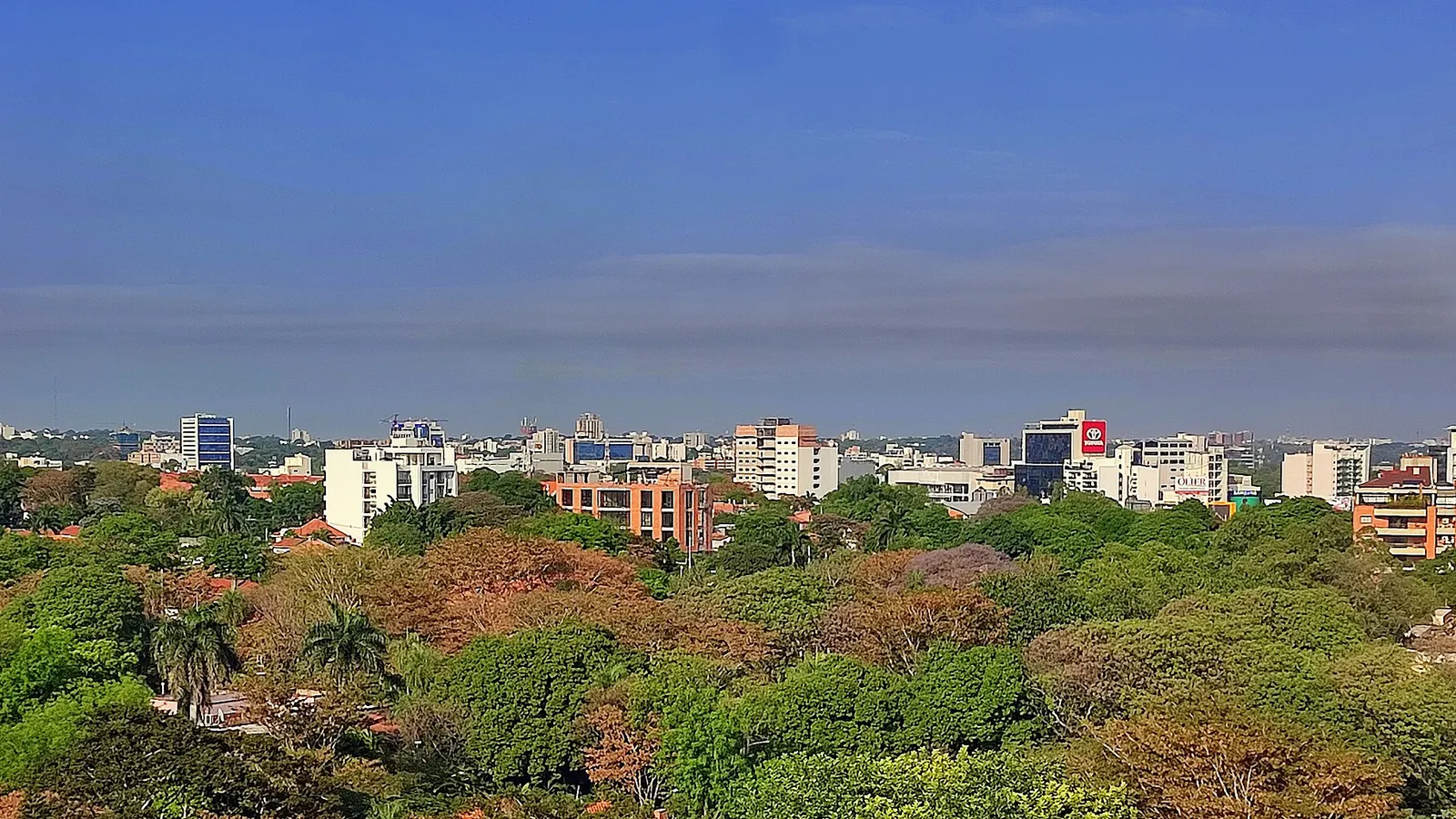
For most buyers evaluating Paraguay for residency purposes, this distinction resolves the question quickly. The properties that typically satisfy the real estate residency route — apartments and income-generating units in and around Asunción’s growth corridors, for instance — are urban property, and urban property carries no nationality-based ownership restriction at all.
Where the border-zone rule becomes genuinely relevant is for buyers specifically drawn to rural land: agricultural holdings, ranches, or undeveloped tracts near an international border. That is a narrower and different conversation, with its own diligence requirements, and it’s worth raising directly if it’s what you have in mind.
How title is actually held
Foreign buyers typically hold Paraguayan property one of two ways:
| Structure | How it works | Common use case |
|---|---|---|
| Individual name | Title registered directly to the foreign buyer, passport alone | Straightforward purchases, single-owner properties |
| Paraguayan or foreign entity | Title held by a company, with the buyer as owner of the entity | Multiple owners, estate planning, or where a corporate wrapper suits the buyer’s broader structure |
Both are legitimate and commonly used; which one makes sense depends on your circumstances — succession planning, co-ownership with family members, or an existing corporate structure you’d rather fold the asset into. This is confirmed case by case, not defaulted to one answer.
Buying process, in outline
A property purchase in Paraguay generally moves through the same stages regardless of buyer nationality:
- Title and zoning diligence — confirming clean title, correct zoning classification, and (where relevant) that the property sits outside any restricted border-zone rural designation.
- Offer and contract — terms agreed and documented, typically in a notarised contract.
- Payment and closing — funds transferred and the transaction formalised before a Paraguayan notary.
- Registration — title recorded with Paraguay’s public registry.
If the purchase is being made to satisfy the real estate investment route toward the Investor Pass, one detail changes the paperwork slightly: under Resolution N° 0283/2026, the qualifying file can be built either on a fully registered transfer deed, or on a notarised contract once at least 30% of the declared value has been paid — useful to know if you’re timing a purchase against a residency application rather than buying purely as a private transaction.
How property ownership connects to residency
Owning property in Paraguay does not, by itself, grant residency, visa status, or any immigration benefit — ownership and residency are separate questions under Paraguayan law, and no honest description of the market should blur that line. What connects the two is the real estate route under the Investor Pass programme: a qualifying property investment of USD 200,000, in a unit destined to economic activity rather than purely personal use, can serve as the basis for a Foreign Investor Certificate and, from there, permanent residency.
That threshold sits at the higher end of the Investor Pass routes — for how it compares to the film, SUACE, tourism, and financial-instruments alternatives, along with the government fees, legal fees, and incidentals layered on top of any of them, see the full Paraguay residency cost breakdown.
Buying property purely as an investment, with no interest in residency, is also entirely normal and requires none of the above — the residency pathway is an option the purchase can unlock, not a condition attached to every sale.
FAQ
Do I need residency or a visa to buy property in Paraguay? No. You can purchase real estate in Paraguay as a foreign national on your passport alone, with no residency or visa requirement.
Can foreigners own land near the border with Brazil or Argentina? Rural land within roughly 50 km of the border is restricted under Paraguay’s Border Security Law, but the restriction targets nationals of Brazil, Argentina, and Bolivia specifically (and entities they control) — not foreign buyers generally. Urban property is unaffected regardless of location.
Do I need a Paraguayan company to buy property? No. You can hold title as an individual on your passport. A company structure is available and sometimes preferred for estate planning or co-ownership, but it isn’t a legal requirement to purchase.
Will buying property make me a Paraguayan tax resident? Not automatically. Legal ownership, legal residency, and tax residency are three separate questions under Paraguayan law, each assessed on its own facts — owning a property does not, on its own, trigger tax residency.
Does buying property automatically qualify me for the Investor Pass? No. It has to meet the route’s specific criteria — a qualifying value of at least USD 200,000 and a use destined to economic activity, not personal or family housing — and the residency process itself is a separate filing after the property is acquired. See the real estate residency route for the full requirements.
What’s the real all-in cost of a residency-qualifying property purchase? The USD 200,000 threshold is the qualifying investment, not the full cost of the process — government fees, translation and apostille costs, and legal fees sit on top. The complete cost breakdown itemises each layer.
Considering a property purchase in Paraguay — for residency, for yield, or both? Get in touch and we’ll walk through title diligence, structuring, and whether the real estate route fits your goals.