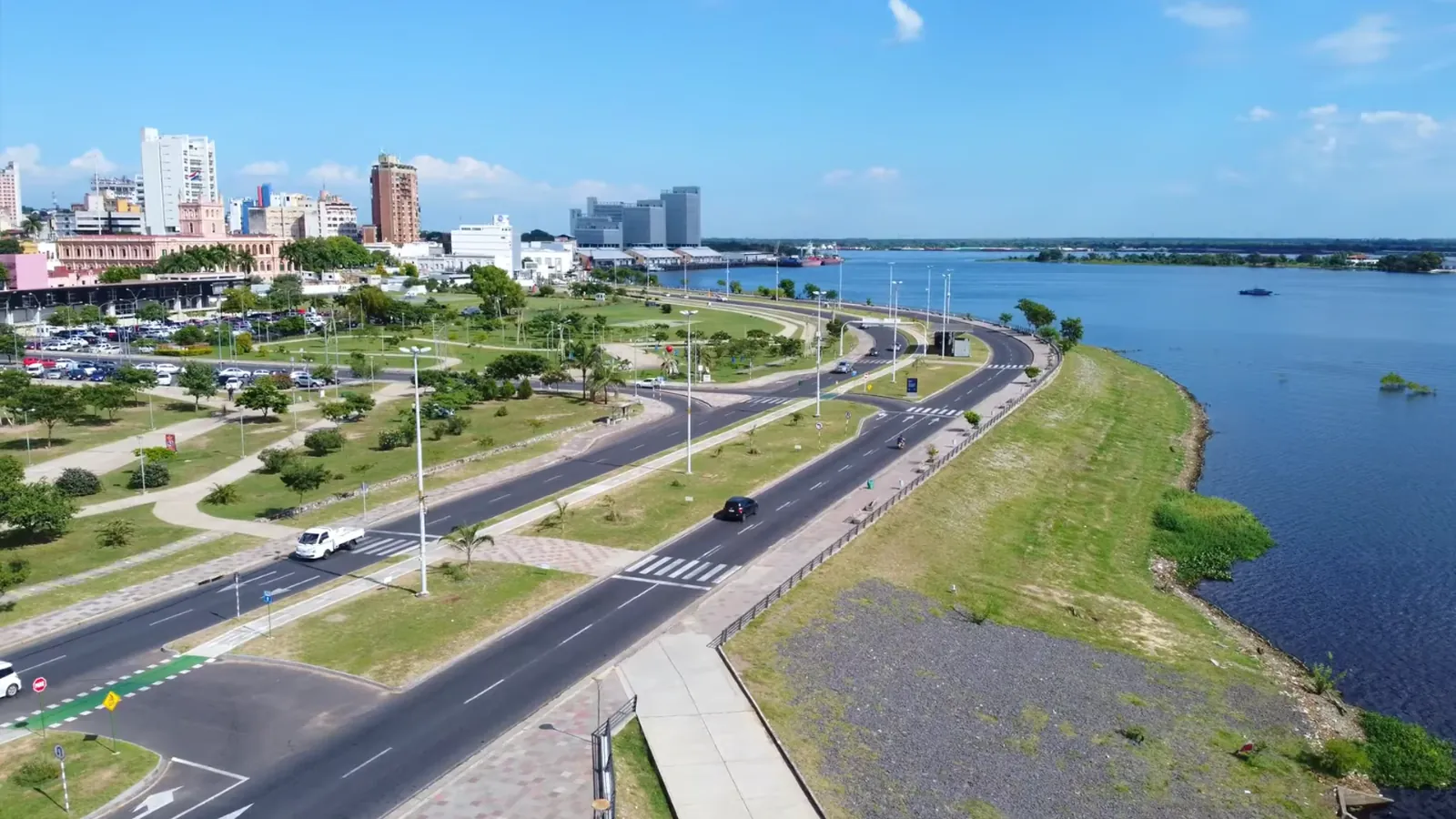
The short answer: yes, for the right buyer — but “Plan B” means different things to different people, and Paraguay is not equally good at all of them. It is strong on capital efficiency, speed to permanent residency, and a territorial tax system with no expiry date. It is weaker on expat infrastructure, real estate liquidity, and international name recognition than more established alternatives. This page sets out both sides plainly, because a firm that only tells you the upside isn’t actually helping you plan.
What “Plan B” actually needs to deliver
Before weighing Paraguay specifically, it’s worth being precise about what a second residency is supposed to do for a family that already has a functioning life somewhere else. At minimum, a credible Plan B should offer:
- A legal right to relocate on short notice, already secured before it’s needed — not something applied for in a crisis.
- A stable jurisdiction, politically and economically, that isn’t itself a source of the risk being hedged against.
- A tax position that doesn’t create new complications on top of whatever problem prompted the move.
- A realistic path to something more permanent — citizenship, or at least a status that doesn’t lapse if left unused for a while.
Paraguay answers three of those four well. The fourth — realistic day-to-day livability if you had to relocate full-time tomorrow — is the honest, qualified answer, and it’s where most of this page’s nuance lives.
Where Paraguay is genuinely strong
Capital efficiency. Paraguay’s Investor Pass routes run from USD 70,000 (a SUACE company) to USD 200,000 (real estate or financial instruments), with a lower-cost film pathway from USD 40,000 under a separate legal basis. That is a fraction of the entry cost for comparable programmes in Panama, Portugal, or the Caribbean citizenship-by-investment states, and it buys direct permanent residency, not a temporary or provisional stage.
Speed. The Foreign Investor Certificate (CIE) is issued within roughly five business days of a complete file, and permanent residency itself is typically resolved within several months — with no prior temporary-residency stage to clear first. For a family that wants the legal right to relocate secured now, not eventually, that structural directness is a real advantage over programmes that stack a multi-year provisional period in front of permanent status.
A territorial tax system with no sunset clause. Under Paraguay’s tax code, income arising outside the country is generally outside the scope of Paraguayan income tax, assessed on individual facts — and unlike some regional alternatives, this treatment doesn’t expire after a fixed number of years. It’s a genuinely different proposition from a time-limited “new resident” tax holiday. It is not, on its own, a reason to relocate tax residency lightly, and it says nothing about what your home country still expects of you — see our full, caveated tax residency page before treating this as settled.
A light maintenance obligation. Permanent residency is maintained with as little as one visit to Paraguay every three years — a genuinely low bar for a family that wants the status secured without committing to living there.
Political and macroeconomic stability, still building a track record. Paraguay reached investment grade with Moody’s in 2024 and S&P in 2025, and has posted some of the strongest real GDP growth in the region recently. That trajectory is real, but it is early — Paraguay’s ratings sit below more established regional peers, and “investment grade since 2024–2025” is a different claim from “investment grade for decades.”
Where Paraguay is genuinely weaker
This is the section most Plan B marketing skips, and it’s the one that determines whether Paraguay fits your specific situation.
- Expat and retiree infrastructure is thinner than in more established markets. International schools, private healthcare networks, and English-speaking service infrastructure exist in Asunción and are growing quickly, but they don’t yet match the decades-deep ecosystems built in places like Panama City or Montevideo. If your Plan B needs to work as a full-time relocation on day one, this is worth weighing honestly.
- Real estate liquidity is limited relative to more mature markets. Paraguay’s property market is real and growing, but it has less resale depth, fewer established developers with long delivery track records, and a narrower buyer pool than markets with decades of foreign investment behind them.
- The currency floats. The guaraní is not pegged or dollarised, unlike, for instance, Panama’s use of the US dollar as legal tender. Day-to-day cost planning and property transactions in Paraguay involve exchange-rate exposure that a dollarised jurisdiction avoids entirely.
- International name recognition is still modest. Paraguay doesn’t carry the same instant recognition among advisers, banks, or other governments that longer-established programmes do. That’s not a legal disadvantage, but it can mean more explaining — to a bank, a school, or a counterpart — than a more familiar jurisdiction would require.
- CRS non-participation cuts both ways. As of the most recent data reviewed for this site, Paraguay does not participate in the OECD’s Common Reporting Standard for automatic exchange of financial information — a status worth reconfirming, since participation lists change. Depending on your circumstances, that can be read as a genuine feature or a genuine gap — either way, it is not a substitute for correctly handling your reporting obligations at home, and shouldn’t be treated as a planning shortcut.
Paraguay against the honest alternatives
No jurisdiction wins on every axis, which is exactly why this comparison is worth doing properly rather than picking a favourite and building the case backward.
| Paraguay | Panama | Uruguay | |
|---|---|---|---|
| Entry point | From USD 40,000–70,000 | From USD 200,000 | No fixed investment route |
| Direct permanent residency | Yes, every route | Only the pricier Qualified Investor track | N/A — no investor-visa equivalent |
| Tax system | Territorial, no sunset | Territorial, no sunset | Source-based, with a time-limited exemption on foreign passive income |
| Currency | Guaraní (floating) | US dollar (legal tender) | Peso |
| Expat infrastructure | Growing, still developing | Deep, decades-established | Deep, Western European-inflected |
| Cost of living | Among the lowest in the Americas | Moderate | Among the highest in Latin America |
We work exclusively on the Paraguay side of this table, which is precisely why we’ve laid out the full Panama comparison in detail elsewhere — including where Panama is genuinely the better answer for a given buyer. A Plan B built on an honest comparison holds up better than one built on the first pitch you heard.
Who Paraguay is actually a good Plan B for
Paraguay tends to fit best for people who:
- Want the legal right to relocate secured at the lowest realistic capital outlay, without needing to live there full-time in the near term.
- Are comfortable being an early mover in a market that is investment-grade but still building out its expat depth, in exchange for materially lower cost and faster permanent status.
- Value a territorial tax system that stays simple over time, more than they value a currency peg or a mature real estate resale market.
- Are building regional optionality — a base inside Mercosur, with the option to add a second jurisdiction later — rather than looking for a single, maximal answer.
It tends to fit less well for someone who needs a fully built-out relocation destination on day one, who is optimising specifically for US-dollar currency stability, or for whom brand recognition with banks and institutions matters more than cost or speed.
The honest bottom line
Paraguay is a genuine, structurally sound Plan B for the buyer prioritising capital efficiency, a fast route to permanent status, and a tax system that doesn’t carry an expiry date. It is not the most built-out option, the most liquid real estate market, or the most internationally recognised name in this space — and a firm that told you otherwise would be selling, not advising.
The right question isn’t “is Paraguay good,” in the abstract. It’s whether Paraguay’s specific trade-offs match what your family actually needs a second residency to do. If you’d like your circumstances assessed directly against Paraguay’s Investor Pass programme — and told plainly if another route, or another country, would serve you better — get in touch and we’ll walk through it.